
Cooling an Old House With No Ductwork: Mini-Splits for Mill Houses and Additions
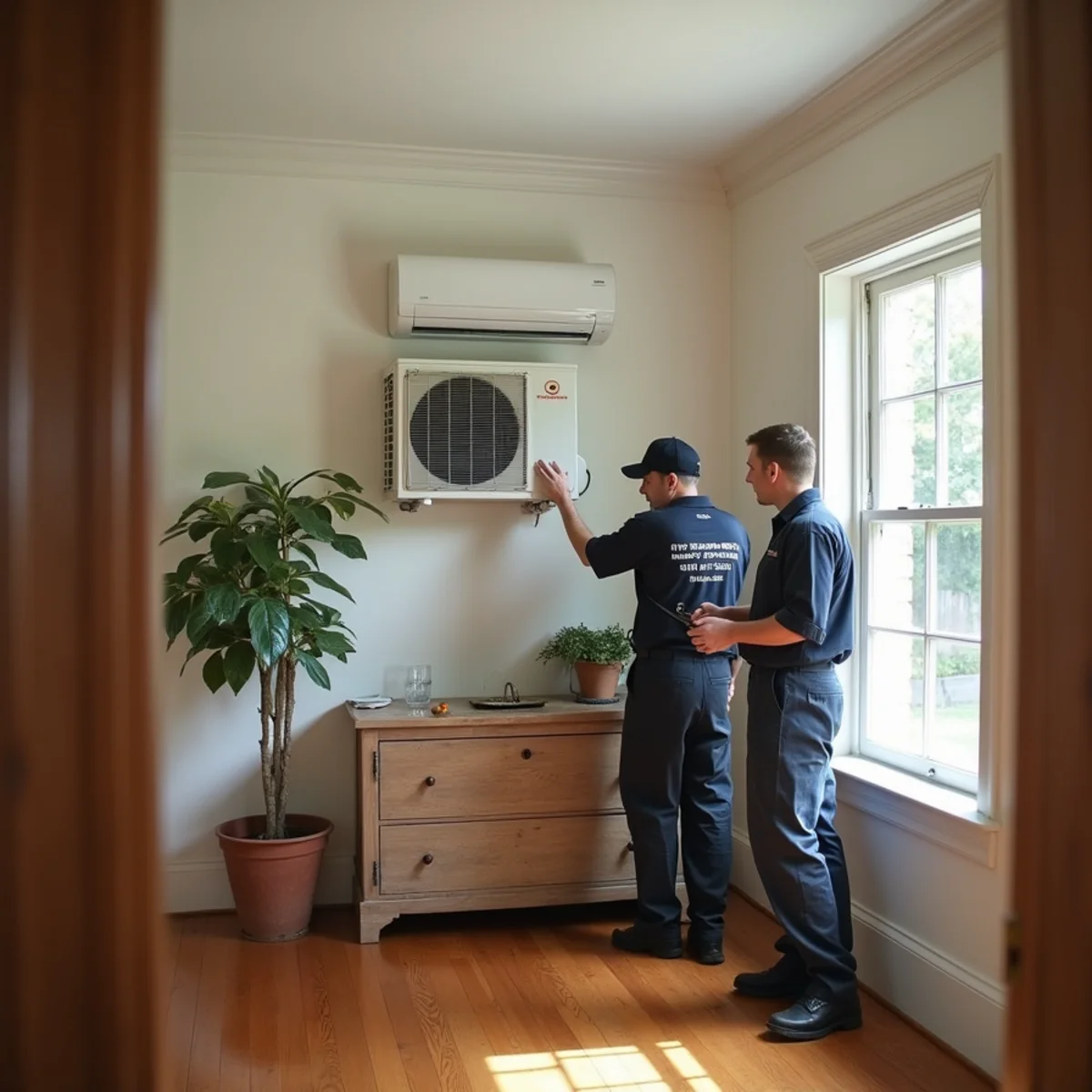
Architectural Realities of Historic Homes in Dunn and Erwin, NC
Our coverage territory is defined by rich architectural heritage, from Victorian and Craftsman bungalows along Ellis Avenue and Divine Street in downtown Dunn to the historic cotton-mill cottages constructed for Erwin Mills workers along Denim Drive in Erwin. These homes feature heart pine timbers, 10-foot plaster ceilings, and distinctive architectural moldings.
However, because these homes were constructed between 1900 and 1945, they were engineered long before residential air conditioning existed. Homeowners relied on high ceilings, double-hung sash windows, and wrap-around covered porches to catch summer breezes. Today, retrofitting these structures with modern climate control presents unique preservation and engineering challenges.
Comparing Historic Home Cooling Options: Mini-Splits vs. Traditional Systems
When modernizing a classic residence without existing supply and return duct runs, homeowners have four primary options. Review the engineering and financial tradeoffs below.
| Cooling Solution | Structural Disruption | Energy Efficiency (SEER2) | Noise Level (dB) | Installed Cost Range | Historic Preservation Score |
|---|---|---|---|---|---|
| Ductless Mini-Split Heat Pump | Minimal: 3-inch wall penetration | 19.0 to 28.0+ SEER2 (Ultra-high) | 19 – 25 dB (Whisper quiet) | $4,200 – $12,800 (1 to 4 zones) | Superior (Preserves original trim & plaster) |
| Window AC Units | None: window sash mounted | 9.0 to 11.0 CEER (Low) | 52 – 62 dB (Loud hum) | $350 – $700 per unit | Poor (Blocks light, security risk, rot risk) |
| Central Ducted System (Soffited) | Severe: dropped ceilings, lost closets | 14.3 to 16.0 SEER2 | 38 – 45 dB (Moderate) | $10,500 – $18,000 (Major remodel) | Very Poor (Cuts through historic architecture) |
| High-Velocity Small-Duct System | Moderate: 2-inch flexible tubes in walls | 13.5 to 15.0 SEER2 | 42 – 50 dB (Air rush sound) | $12,000 – $19,500 | Fair (Difficult in tight unvented attics) |
Why Traditional Ducts Destroy Historic Interior Charm
Attempting to force conventional ducted central air into an older home requires severe structural compromises:
- Dropped Soffits and Ruined Sightlines: Running 12-inch metal supply ducts requires framing bulky drywall chases across high ceilings, destroying historic crown moldings and picture rails.
- Sacrificing Historic Closets: In two-story homes, routing vertical riser ducts between floors consumes precious bedroom closet space in homes that already have tiny closets.
- Low-Clearance Pier Foundations: Mill cottages along Denim Drive in Erwin often sit on low brick piers with only 14 to 18 inches of crawl space crawl clearance, making it impossible to hang and insulate bulky ductwork above damp soil.
Need an HVAC Specialist in Dunn, NC?
How Modern Ductless Mini-Splits Work Without Invasive Remodeling
Ductless mini-split systems eliminate every structural obstacle. An ultra-quiet outdoor inverter heat pump connects to up to five independent indoor heads via a flexible bundle consisting of twin insulated copper refrigerant lines, a 14-gauge power and communication cable, and a condensation drain tube.
This entire bundle passes through a single 3-inch penetration drilled through an exterior wall behind the indoor unit. On the home's exterior, the lines are encased in architectural, UV-resistant line-hide raceways that can be painted to match your cedar shake, German lap siding, or brick exterior.
Technician E-E-A-T Installation Rule: Plaster Anchoring & Nitrogen Pressure Testing
Installing mini-split heads on 90-year-old lath and plaster walls requires specialized craftsmanship. Standard drywall plastic anchors will shatter brittle plaster keys, causing wall plates to loosen over time. Our technicians locate solid wood studs using rare-earth magnet sensors or install heavy-duty toggle bolts into structural backing. Furthermore, all refrigerant linesets undergo a 400-PSI dry nitrogen pressure test for a minimum of 24 hours to ensure 100% leak-free reliability before evacuating down to 350 microns.
Electrical Service Requirements: Upgrading 60-Amp or 100-Amp Fuse Boxes
A crucial pre-installation checkpoint in older homes throughout Erwin and Dunn is evaluating the main electrical service panel. Many early mill homes still operate on 60-amp or 100-amp electrical services with screw-in glass fuses or crowded split-bus breaker panels.
Modern multi-zone inverter heat pumps require a dedicated 240-volt double-pole circuit (typically 20 to 35 amps) to power the outdoor condenser. The indoor air handlers receive their low-voltage power directly from the outdoor unit through the interconnecting cable, meaning no separate electrical circuits are required inside each room.
If your home's main panel lacks breaker capacity, our team coordinates a licensed electrical panel upgrade or subpanel installation alongside your HVAC project to ensure complete National Electrical Code (NEC) compliance and fire safety.
Multi-Zone Independent Climate Control
A major benefit of multi-split systems is individualized room zoning. Each indoor air handler features its own onboard microprocessor and remote thermostat. Homeowners can set their master bedroom to a brisk 66°F for sleeping while keeping an unused parlor or guest bedroom at 76°F, preventing wasted electricity and lowering seasonal energy bills by 30% to 50% compared to central ducted systems.
Related Services & Service Areas
Related HVAC Services
Nearby Communities Served
Frequently Asked Questions
Common inquiries related to this guide.
No. Modern variable-speed inverter mini-splits operate between 19 and 24 decibels on low speed. This is quieter than a whisper, rustling autumn leaves, or an empty library, making them virtually imperceptible in quiet bedrooms.
Not urgent? Send a request
Planning a replacement or seasonal tune-up? Fill out the form below. For the fastest help, call (321) 478-0693.